
Route sales in CPG are messy when every part of the day sits in a different tool. A rep may take an order in the morning, update a customer note during a store visit, handle an invoice from the van, and still need to prove that a delivery was completed. If the team also checks shelves or takes product photos, the workflow gets even more scattered. Route sales software should reduce that mess, not add another place where data gets stuck.
This list looks at platforms that solve different parts of the route sales process, from full DSD workflows to route planning, inventory replenishment, and enterprise field sales.
1. SimplyDepo
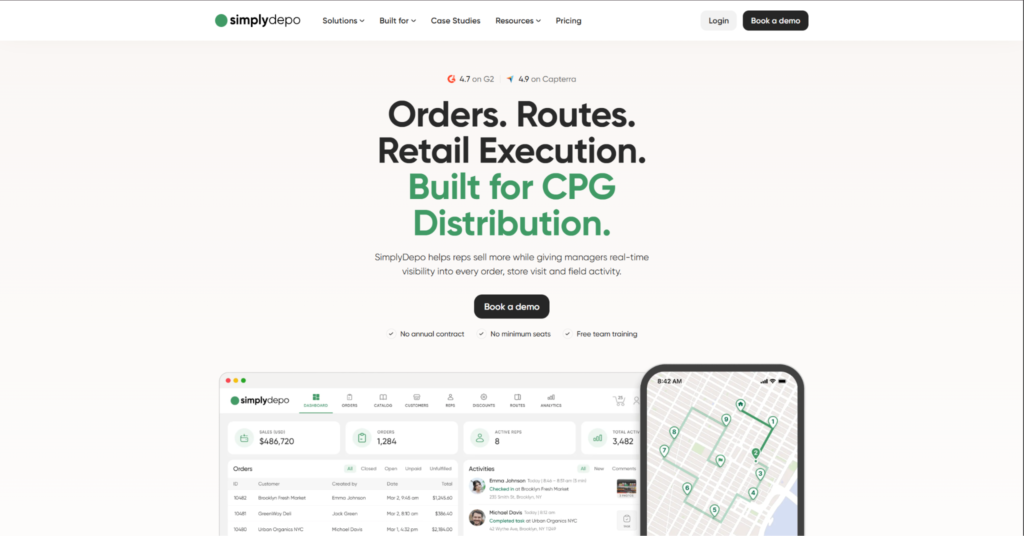
Self-distributing CPG brands often reach a point where spreadsheets, order forms, accounting exports, and delivery notes stop holding together. SimplyDepo is built for that stage, when field sales, delivery, invoicing, and store checks need to happen inside one mobile workflow. Reps can capture orders, manage route work, issue invoices, collect Stripe payments, and record delivery proof without jumping between several apps. SimplyDepo route sales software also brings retail execution into the same visit, including shelf checks, planogram photos, and store notes. That matters for brands where one person may sell, deliver, invoice, and document what happened in the account.
The bigger value is not just having many tools in one place. It is the way those tools reduce repeat admin after the route is done. QuickBooks Online sync helps keep accounting cleaner, while offline access lets reps keep working in stores, warehouses, or low-signal areas. For smaller and mid-sized CPG teams, this can be more useful than a heavy enterprise system that takes months to roll out. SimplyDepo is strongest when daily field work needs to stay simple:
- Full route sales workflow from order capture to delivery proof;
- Van sales, mobile invoicing, and payment collection;
- Offline mobile access for field reps, drivers, and merchandisers;
- Two-way QuickBooks Online sync for cleaner back-office work;
- Retail execution tools for shelf checks, photos, and store visit notes.
SimplyDepo is best for US and Canadian teams using QuickBooks Online. It is not aimed at global enterprise operations with deep ERP requirements, but it is a strong fit for CPG brands that want DSD, route sales, and merchandising in one practical app.
Best Match
SimplyDepo is a good choice for brands that sell and deliver through the same field team. It fits companies that want faster setup, fewer disconnected tools, and a route workflow that also covers store-level execution.
2. RouteStar Solutions
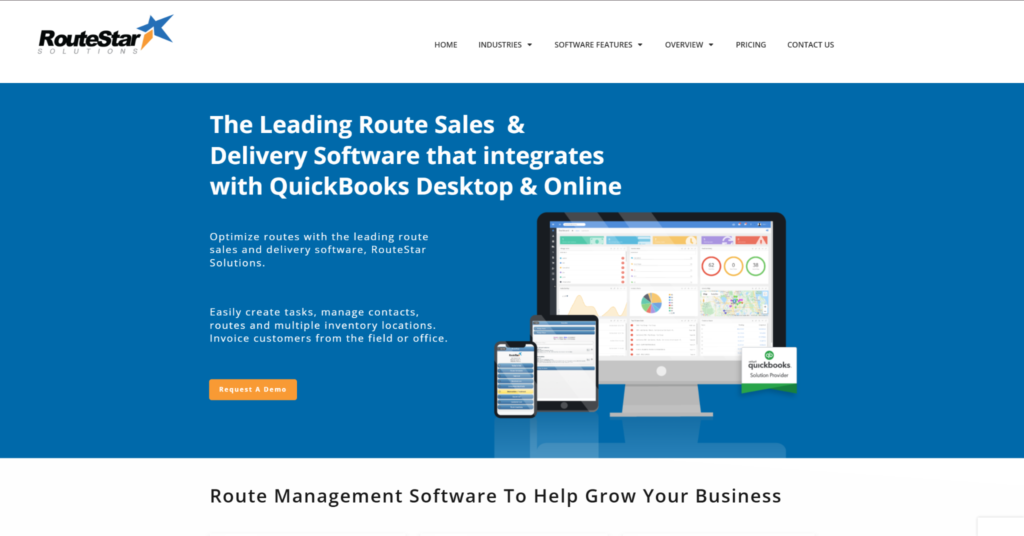
RouteStar Solutions is closer to traditional route accounting than a general field sales app. It is made for distributors that need to manage truck inventory, recurring routes, invoices, customers, and QuickBooks-connected back-office work. That makes it relevant for teams where the route itself is the center of the operation. If the main problem is tracking what leaves the truck, what gets invoiced, and how route activity flows into accounting, RouteStar deserves a look. It may not feel as broad as newer mobile-first DSD platforms, but its focus is clear.
This kind of system is useful when route discipline matters more than a polished sales presentation or merchandising. Some distributors do not need a complex B2B storefront or retail execution layer. They need route records, inventory control, customer balances, and invoice handling to stay accurate. That is where RouteStar can make sense. Its strongest points are:
- QuickBooks-focused route accounting workflows;
- Truck inventory and customer route management;
- Invoicing support for delivery and sales teams;
- Tools for distributors with recurring route operations.
RouteStar is practical for businesses built around route accounting. Teams that also need shelf checks, photo reporting, and a broader field sales workflow should compare it with fuller DSD platforms.
Ideal Use Case
RouteStar fits distributors that care most about route accounting and QuickBooks workflows. It is better for route-heavy operations than for brands trying to combine DSD, retail execution, and B2B ordering in one place.
3. Pepperi
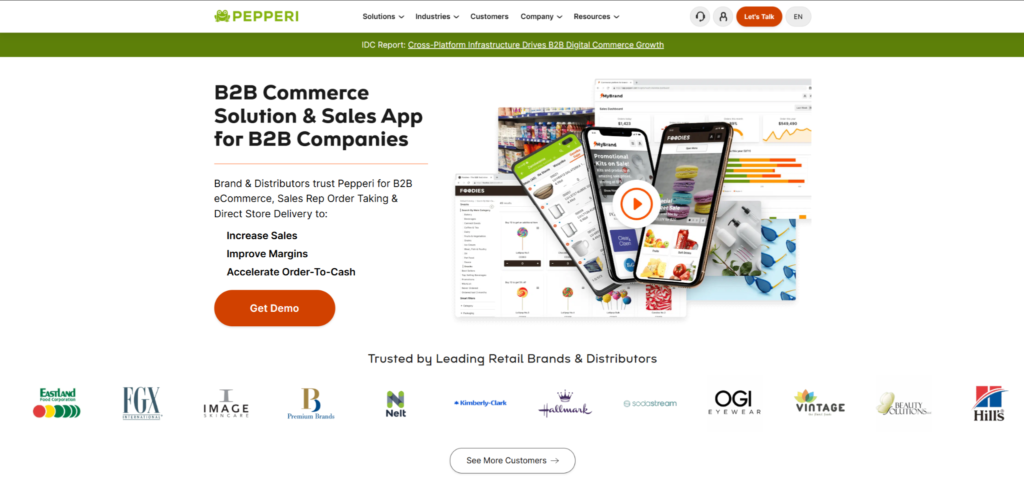
Pepperi plays in a different category from lightweight route sales tools. It is a broader platform for B2B commerce, field sales, DSD, and trade promotion workflows. Larger distributors and CPG brands may like it because it can connect ordering, catalogs, sales reps, and commercial processes in one environment. It is especially relevant when a company has multiple sales channels and needs more control across the whole sales operation. For enterprise or mid-market teams, that extra structure can be useful.
The tradeoff is complexity. A platform like Pepperi can offer more room to build out processes, but it usually asks more from the team during setup and daily management. Smaller self-distributing brands should be honest about whether they need that much system depth. If the goal is quick route sales adoption, a narrower platform may be easier to manage. Pepperi is worth considering for:
- B2B commerce tools for distributor and wholesale ordering;
- Field sales support for reps working with retail accounts;
- DSD and order workflows for larger sales teams;
- Stronger fit for complex enterprise sales operations.
Pepperi is a credible option for companies with larger commercial teams and more layered sales needs. It is less straightforward for smaller CPG distributors that mainly need route sales, invoicing, and delivery work handled quickly.
Where It Works Best
Pepperi fits enterprise and mid-market teams that need a bigger sales system. It makes more sense when B2B commerce, field sales, and DSD sit inside a broader commercial operation.
4. Badger Maps
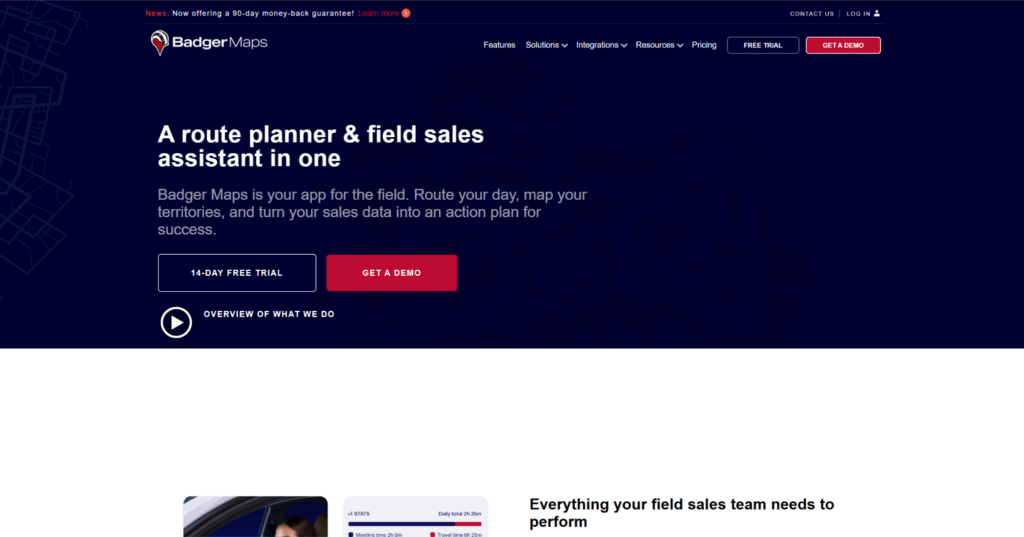
Badger Maps is not a full DSD platform, and that is important to say directly. It is mainly a route planning and field sales tool for outside sales reps. The product helps reps map customers, plan visits, organize territories, and reduce unnecessary drive time. For teams that spend too much of the day figuring out which accounts to visit next, this can be useful. In CPG distribution, it can support sales coverage, but it will not replace tools for invoicing, delivery proof, or van inventory.
Badger Maps makes the most sense when the route is about sales visits rather than delivery operations. A rep can use it to plan a smarter day, see nearby customers, and keep account activity organized. That is valuable for field teams focused on prospecting, relationship management, or account coverage. The limits appear when the company needs deeper DSD work after the visit begins. Badger Maps is strongest for:
- Route planning for outside sales reps;
- Map-based customer and territory visibility;
- Visit planning for field sales teams;
- Useful support for reps managing many accounts.
Badger Maps can improve field sales productivity, but it should be treated as a route planning tool. Distributors that need invoices, payments, delivery proof, and accounting sync will need something broader.
Best Scenario
Badger Maps fits teams that want better daily route planning for sales reps. It is not the right pick when the route includes full DSD, van sales, delivery documentation, and accounting updates.
5. OptimoRoute
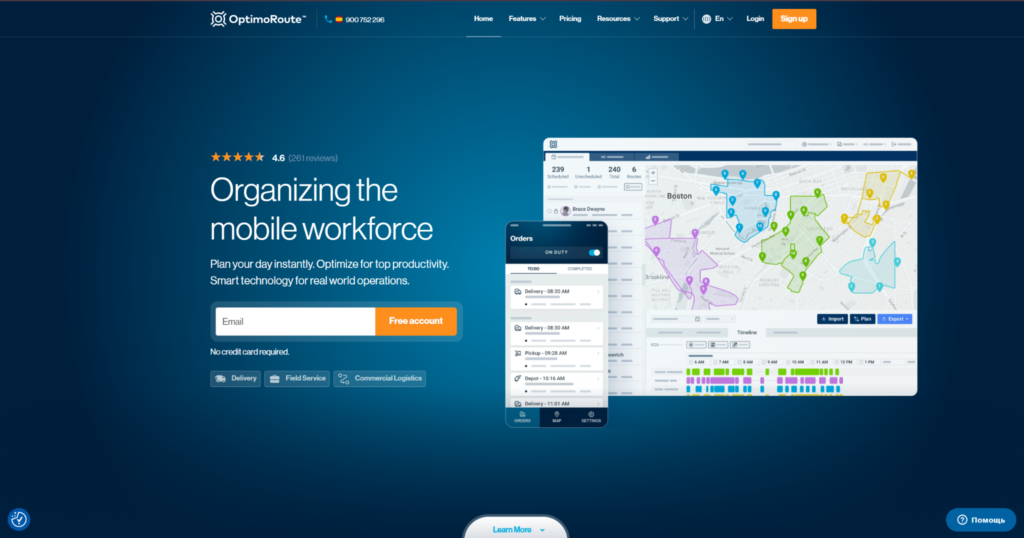
OptimoRoute is built around delivery planning rather than CPG sales execution. It helps teams organize dispatch, optimize routes, schedule drivers, and manage daily delivery work. That makes it useful for companies where missed delivery windows, inefficient routing, or too many manual dispatch decisions create problems. A distributor with many stops can use it to bring more order to the delivery day. It is practical software, but it does not try to cover every part of route sales.
That narrower focus can be a strength or a limitation, depending on the team. If the main issue is delivery routing, OptimoRoute may be enough. If the team also needs order capture, mobile invoicing, van sales, accounting sync, and retail execution, it may only solve one part of the workflow. CPG distributors should decide whether they need a route planner or a full route sales system before choosing. OptimoRoute is useful for:
- Route optimization for delivery teams;
- Dispatch planning and driver scheduling;
- Delivery tracking for daily operations;
- Useful planning tools for high-stop routes.
OptimoRoute is a good fit when delivery planning is the bottleneck. It is less complete for CPG brands that want sales, invoicing, delivery proof, and store execution connected in the same workflow.
Best Practical Fit
OptimoRoute fits teams that need cleaner dispatch and smarter delivery routes. It works best when routing is the main problem, not when the company needs full DSD software.
6. eTurns TrackStock
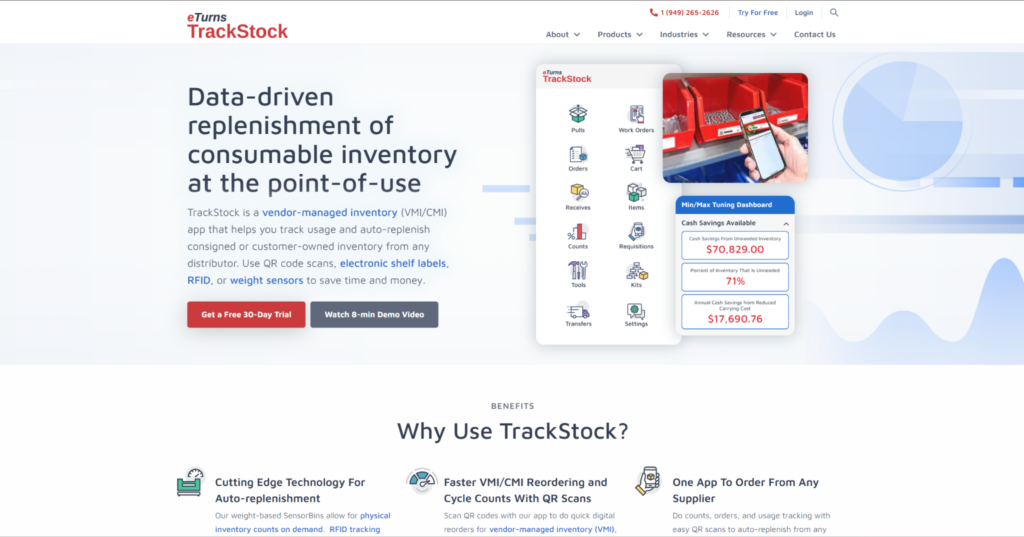
eTurns TrackStock sits next to route sales, but it solves a different problem. It focuses on inventory replenishment, stockroom management, mobile scanning, and customer location inventory visibility. That makes it relevant for suppliers or distributors that regularly check and refill inventory at customer sites. In those cases, the route is less about selling from the van and more about keeping stock levels under control. For teams managing repeat replenishment, that can be valuable.
The distinction matters because replenishment software is not the same as DSD software. eTurns can help field teams understand what is available, what needs to be restocked, and where inventory is sitting. It can reduce blind spots in customer stockrooms or supply routes. But teams that need order capture, invoices, payments, delivery proof, and retail execution should be careful not to treat it as a complete route sales platform. eTurns is strongest for:
- Inventory replenishment tools for field teams;
- Mobile stock tracking and scanning;
- Customer location inventory visibility;
- Useful workflows for recurring supply routes.
eTurns can support route-based replenishment, but it does not cover the full CPG route sales loop. It is better for inventory control than for managing the full DSD workflow.
Right Buyer Profile
eTurns fits teams where replenishment and stock visibility drive the route. It is less suitable for brands that need sales orders, van sales, invoicing, payments, and merchandising in one system.
Final Thoughts
Route sales software should be chosen by workflow, not by category name. Some teams only need better route planning, while others need a full DSD setup with van sales, invoices, delivery proof, accounting sync, and retail execution. SimplyDepo is the strongest fit for self-distributing CPG brands that want those pieces in one mobile-first system. Tools like Badger Maps, OptimoRoute, and eTurns can still make sense when the need is narrower. The right choice is the one that matches what reps, drivers, and merchandisers actually do during the day.